
-
Manufacturers
Manufacturers


Comparing Magnetic, Inductive, and Optical Digital Encoders
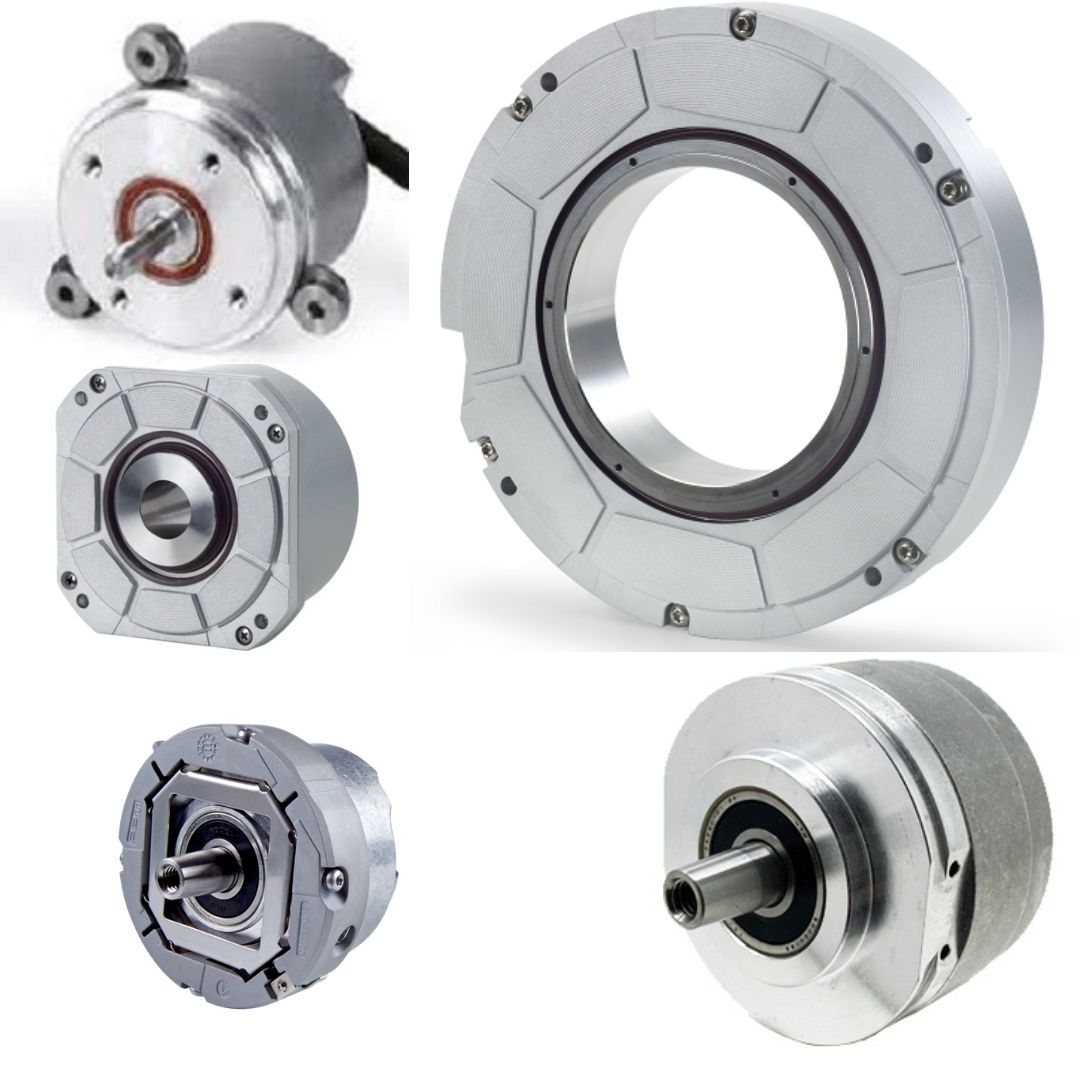
Magnetic encoders make use of positive and negative poles for operation, inductive encoders use charged coils that interact with a disc, and optical encoders use light passing through a disc. To further elaborate on these differences, Walker Machinery, a major distributor of digital encoders in Milton, Ontario, explores the differences between magnetic, inductive, and optical encoders in detail. It also explores selection criteria for choosing between these digital encoders.
What Is A Magnetic Digital Encoder?
A magnetic encoder is a type of encoder that uses changing magnetic fields for detecting linear or rotational position. The main components of a magnetic digital encoder include a permanent magnet and a sensor.
What Are Some Features Of Magnetic Encoders?
The salient features of magnetic encoders include:
- Cost-effective solution for position measurement
- Compact and robust in design. Can handle high vibration and contamination, making them suitable for challenging applications such as mining.
- Also ideal for applications where multiple types of the same digital encoder are required.
What Is An Optical Encoder?
Optical encoders do not use a magnetic field. Instead, they use light for their motion-sensing applications. In this type of encoder, the light passes through a graded or coded disc, and the encoder provides feedback based on how the markings interrupt the light. They can be further subclassified as incremental optical encoders and absolute optical encoders. The core components of optical encoders include a light source, code disc, and photodetector assembly.
What Are Some Features Of Optical Encoders?
The salient features of optical encoders include:
- These digital encoders offer high accuracy, reliability, and resolution
- A versatile solution, as a wide range of variants can be designed for specific applications
- Ideal for use in precision-driven systems such as robotics, telescopes, antennae, and CNC machine tools.
What Is An Inductive Encoder?
An inductive encoder is another type of non-contact position-sensing device that uses electromagnetic induction by means of charged coils. They convert the linear or rotary motion into electrical signals. They comprise a stator, which has the charged coils, and the rotor, which is a disc. Although they use electromagnetism, they are not the same as magnetic encoders, as the latter uses magnetic poles for position sensing instead of eddy currents created by charged coils.
What Are Some Features Of Inductive Encoders?
The salient features of inductive encoders include:
- Highly reliable and precise, making them key in applications where robustness and accuracy are important
- Can handle high levels of vibrations and contamination in challenging environments, unlike optical encoders, which are sensitive to contamination
- Mainly used in general automation systems, servo motors, CT scanners, and associated medical equipment, and robotics.
How To Choose Between Magnetic, Optical, And Inductive Encoders?
As stated above, each type of digital encoder, whether it is a linear encoder or a rotary encoder, has its own features. Therefore, how to choose one for a particular application? These key considerations are a great starting point:
Common Applications
The type of application is one of the best ways to select an encoder between the three. For instance, if accuracy and precision are key during highly dynamic motion, optical encoders are the best choice. Examples include robotics, CNC machinery, antennae, and more.
If the conditions are challenging and require multiple encoders of the same type, then magnetic encoders are a great choice. For instance, the mining sector requires multiple encoders of the same variety that can also handle vibrations and debris without throwing errors.
If there is a need for some balance between durability elements, such as vibration and contamination resistance and some level of accuracy, inductive encoders are an excellent choice. This is why they are used in general automation and CT scanners.
Environmental Factors
Closely correlated to applications, environmental factors are also a major consideration when choosing between optical, magnetic and inductive encoders.
For instance, in clean and sterile environments, optical encoders are a great choice to ensure accurate position feedback. However, even if the conditions are not sterilized, and the level of contamination is minimal, then optical encoders with sealing or protective mounting options can also be considered.
Similarly, if the conditions include excessive vibrations in the range of 30-40 Gs or more, and also features heavy contamination, then magnetic encoders are the clear choice. However, it is important to note that magnetic encoders are not indestructible. For instance, it can be negatively impacted by magnetic brakes nearby.
Inductive encoders can circumvent the challenges of both optical and magnetic encoders. They can handle heavy contamination and high vibration, while also being immune to nearby magnetic elements. However, their challenge lies in ensuring proper proximity between the sensor and the rotor. Thus, the conditions must allow this proximity for proper functioning.
The Ideal Solution
In terms of ideal solutions, optical encoders are unbeatable. Their level of accuracy and precision is unmatched. Moreover, there are many different variations that can be used to meet specific applications. Only when the environmental conditions are harsh do optical encoders become obsolete.
When cost-effectiveness and durability take center stage in extremely challenging conditions, then magnetic encoders emerge as the natural choice.
Lastly, if the environment is not too challenging but requires some level of accuracy, inductive encoders are the ideal choice.
Conclusion
In closing, optical, magnetic and inductive encoders are three distinct types of digital encoders, each with its own pros and cons. Choosing the right one for a particular application requires a keen understanding of some key factors, such as use cases, environmental conditions and ideal scenarios.
To learn more about these encoders, reach out to us at Walker Machinery today. As one of the major distributors of digital encoders in Milton, Ontario, our collection includes linear encoders, rotary encoders, angle encoders, and more. For more information, contact us at 905-876-0890 today.
FAQs:
What are the two main operating mechanisms of optical encoders?
The two main operating mechanisms of optical encoders include transmissive and reflective encoders. The former lets light pass through the disc, whereas the latter reflects the light off the disc.
Do magnetic encoders require frequent maintenance?
No, due to their robust design, magnetic encoders are largely maintenance-free.
Are inductive encoders suitable for high-speed applications?
Yes, due to the contactless nature of inductive encoders, they are suitable for high-speed applications such as servo motors.