
-
Manufacturers
Manufacturers


Absolute Rotary Encoders: Difference Between Resolution And Real-World Accuracy
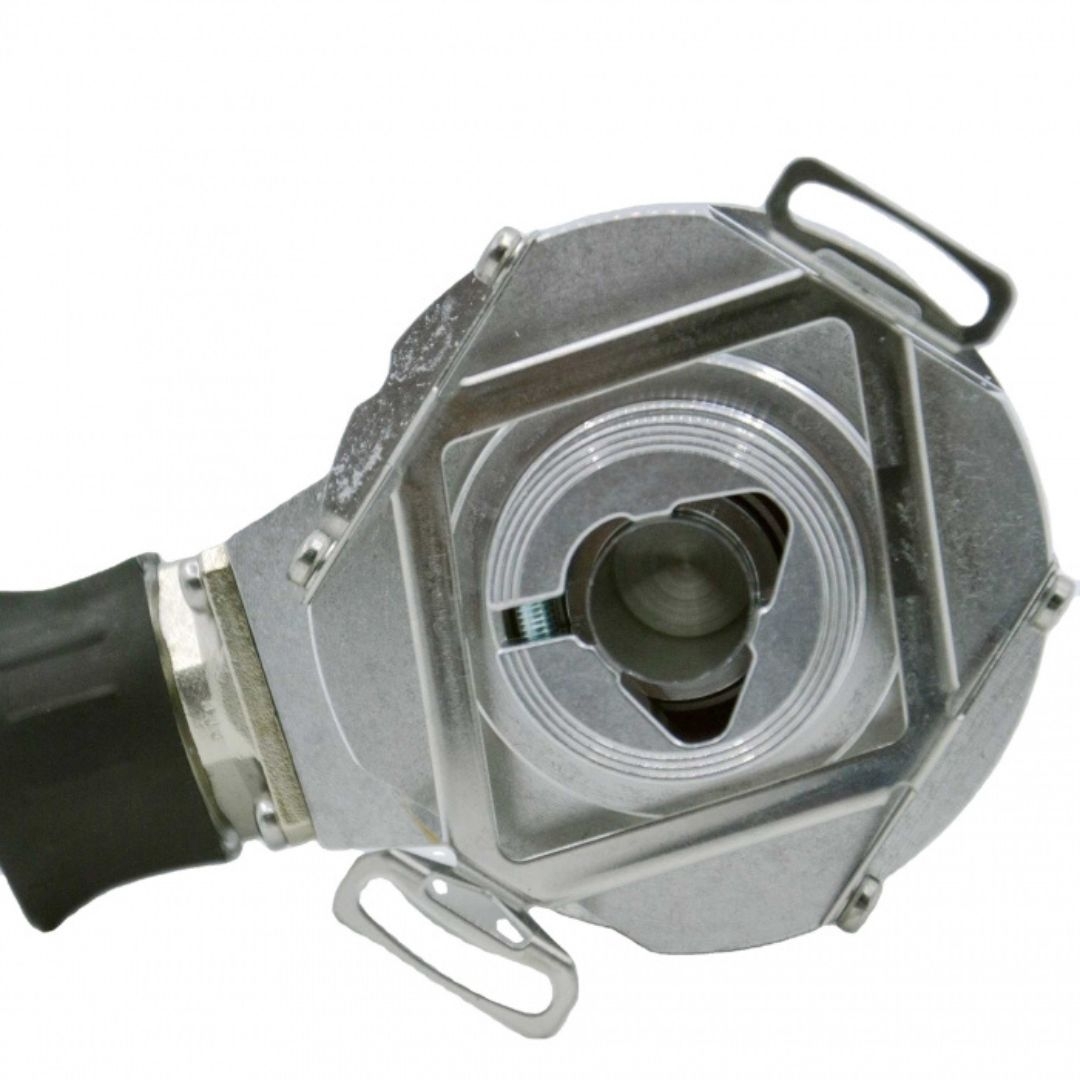
Absolute rotary encoders are known for their high accuracy and resolution. However, one is not the same as the other. High resolution does not automatically guarantee high accuracy and precision. In this blog, Walker Machinery, a major distributor of digital encoders and digital readout systems in Milton, Ontario, explores the difference between resolution and accuracy and factors that affect the latter in real-world applications.
What Is The Difference Between Resolution And Accuracy?
The main difference between resolution and accuracy is how one is perceived under ideal conditions and the other under real-world applications. In simpler terms, resolution is defined as the number of divisions that are available across a stipulated range of measurement. Or, in other words, it is the definition of granularity within a digital encoder.
For instance, a 20-bit digital encoder, which is considered to have high resolution, will measure one revolution into 1,048,576 different positions.
Thus, accuracy is quite different from resolution in this sense, even for an absolute rotary encoder. Accuracy is defined here as the level to which the reported position matches the actual physical position. Hence, a digital encoder with a high enough resolution has the capacity to provide highly accurate results. However, it does not guarantee high accuracy in real-world applications, as there are several factors at play.
What Impacts Encoder Resolution And Accuracy In Real-World Applications?
When operating in real-world conditions, absolute rotary encoders can see a drop in accuracy due to reduced signal amplitude, interpolation stability, or high noise. Here are factors that lead to such unfavourable outcomes, requiring a deeper rethink on encoder accuracy.
Air-Gap Variation
Many absolute rotary encoders have a certain air gap between the rotor and stator. This is a very key aspect of such digital encoders as they do not have frames and bearings, hence acting as a contactless encoder essentially. However, this becomes a problem when the machine it is attached to moves or flexes under heavy load. Alternatively, if it expands under high temperature, it also compromises this air-gap stability between the stator and the rotor. Hence, the signal amplitude is compromised in such cases, and accuracy is not as high as its rated resolution in real-world settings.
Shaft Runout
In practical applications, shafts and bearings never spin on the center perfectly. There are always radial, axial or eccentric deviations during movement. During real-world applications, even these small deviations can be considered as errors or variations in signals. This can show up as a need for encoders with even higher resolutions. However, the truth is that these deviations can lower the levels of resolution in an absolute encoder is unusable. To mitigate this, it is more important to focus on mounting tolerance rather than increasing resolution.
Thermal Drift
Thermal drift can be defined as the changes in physical dimensions of a machine during high temperatures, which cause it to expand. Additionally, different materials expand at different rates based on their material properties. Therefore, the change in temperature can change the sensing target and how the stator, rotor, and housing are calibrated relative to one another. Hence, thermal drift is key here, as even the smallest of changes can affect signal quality and overall accuracy.
This means that an absolute encoder with high resolution that is aligned at room temperature may not be as accurate during thermal expansion or drift, or during structural deflections. This, in turn, impacts their accuracy during real-world applications.
Vibration
Absolute rotary encoders with high resolution are designed to capture even the slightest of movements. This becomes a challenge during practical applications as vibration in machinery is inevitable. As the machine vibrates, the digital encoder can take it as actual physical movement. Thus, it might end up considering it as a genuine change in position or movement, even when the axis is stationary, thereby compromising accuracy.
Electrical Noise And EMI
Electrical noise can also negatively affect the accuracy of absolute encoders in real-world conditions. The presence of different electrical components, such as motors, drives, power suppliers, and poor grounding practices, can introduce electrical noise. If this noise comes into the signal path, the encoder will continue to transmit, but the accuracy of the signal will be compromised. This is why high resolution does not always guarantee high accuracy during industrial applications.
Conclusion
To conclude, absolute rotary encoders and other similar high-resolution encoders can face accuracy challenges due to the causes stated above. As a result, their high resolution should not automatically be considered as high accuracy. In fact, more calibration and careful selection criteria should be taken into account for the best results.
To learn more about digital encoders, contact us at Walker Machinery today. As one of the biggest distributors of CNC controls, digital readout systems, and digital encoders in Milton, Ontario, we offer specialized solutions for your specific needs. Contact us at 905-876-0890 today for more details.
FAQs:
How is resolution expressed in absolute encoders?
Resolution is expressed or defined in absolute encoders in the form of bits. Hence, a higher bit count corresponds to higher resolution.
What are the real-world applications of absolute encoders?
The real-world applications of absolute encoders include robotics, CNC machining, medical sectors, elevators, and more.