
-
Manufacturers
Manufacturers


Detailed Comparison Between Single And Multi-Turn Digital Encoders
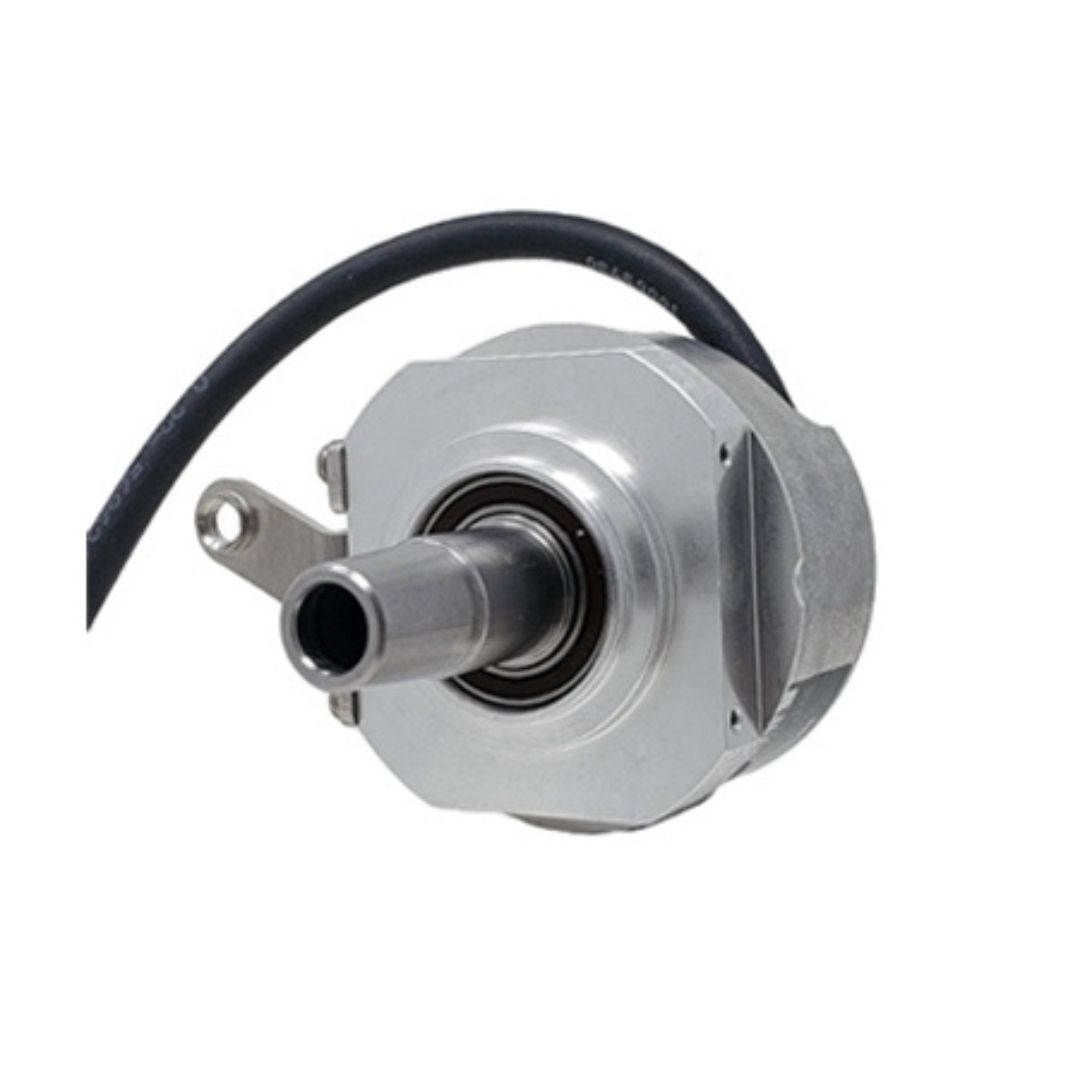
Among the different types of rotary encoders available, the two most prominent ones are single-turn and multi-turn digital encoders. What are the major differences between the two? What are their advantages, types, and possible applications? In this blog, Walker Machinery, a leading distributor of digital encoders in Milton, Ontario, explores these questions in detail.
What Is A Single-Turn Digital Encoder?
A single-turn encoder is a type of rotary encoder that measures only in one full rotation or 360 degrees. It provides feedback within this range of motion and does not monitor speed or position after the rotation. While it might seem a bit simplistic, it is still a vital part of CNC control systems and position measurement.
What Are The Advantages Of A Single-Turn Digital Encoder?
The major advantages of a single-turn digital encoder include:
- Cost-Effective: Single-turn encoders are one of the most cost-effective position sensor devices due to their simplistic design and wiring. Therefore, they are easier to install and operate as well.
- High Resolution: Although rather simple and limited in application, it is by no means imprecise. In fact, it is known for its extreme accuracy and precision within a 360-degree rotation.
- Instant Position Data: Single-turn digital encoders also offer instant position data within their range as soon as the device starts. This speed is applicable even after the system comes online after a power loss.
- Highly Reliable: Since they offer real-time data irrespective of the circumstances, single-turn digital encoders are invaluable in a wide range of applications due to their reliability.
What Are The Applications Of A Single-Turn Digital Encoder?
The main applications of a single-turn digital encoder include:
- Telescopes: In telescopes, single-turn encoders help to precisely measure the horizontal angle and elevation within a single rotation.
- Antennas: Here, these encoders are used to measure the rotational position of the antennas.
- Entry-level motors: For entry-level motors, these digital encoders serve as an accurate position-sensing device.
- Blood pumps: Here, the encoder provides precise angular position and speed to ensure consistent flow rates.
- AGV drive wheels: They are used in navigation and course correction, specifically in steering systems.
- Wind turbine generators: In wind turbine generators, the digital encoders are used for pitch control.
What Is A Multi-Turn Digital Encoder?
A multi-turn digital encoder has one major distinction from a single-turn encoder. It also provides accurate rotation speed and position feedback, but beyond the scope of 360 degrees, which is the limitation of its single-turn counterpart. This is achieved via 3 different mechanisms, which are addressed in the next section.
What Are The Different Types Of Multi-Turn Digital Encoders?
Battery Back Up
In this type, there are several unique markings on the surface of a readable disc. Whenever a full turn or rotation is completed, this setup sends out a pulse to mark it. In this setup, there is a requirement for data storage and processing. For this purpose, battery backups are used in this form of multi-turn digital encoder.
Geared
In this instance, a grooved disc is replaced by gears. The rotor portion of the encoder is connected to a gear system, which keeps track of the rotations. While this eliminates the need for a battery backup, they still take up plenty of space.
Wiegand-Sensor
Lastly, the Wiegand-Sensor setup uses a magnetic pulse instead of gears. Whenever a full rotation or revolution is complete, the polarity of the pulse is reversed.
What Are The Advantages Of Multi-Turn Digital Encoders?
- Maintains Absolute Position: These encoders not only maintain the exact position of the device after a single position, but they can also help track the number of complete rotations, which is not possible with a single-turn encoder.
- Highly Accurate and Reliable: Multi-turn encoders are known for their high degree of accuracy across multiple applications, and are also more reliable since they keep track of data with hardware.
- Excellent For Long-Distance Applications: In cases where this long travel in the linear plane or multiple rotations, nothing can beat the effectiveness of multi-turn rotary encoders.
- Highly Robust: The accuracy and precision, combined with robustness and longevity, make these encoders an ideal solution for long-distance applications.
What Are The Applications Of Multi-Turn Digital Encoders?
The main applications of a multi-turn digital encoder include:
- Robot joints: These encoders aid the motion of robot joints with precise control, which in turn is used in industrial assembly and autonomous navigation.
- Servo motors: Multi-turn encoders are responsible for absolute position tracking in uses with multiple rotations.
- Wind turbine blades: These rotary encoders facilitate pitch control in wind turbine blades.
- Cranes: In the case of cranes, these encoders keep track of position and rotation across large travel distances.
Conclusion
To conclude, both single and multi-turn digital encoders have their own features and applications. The only major difference is that the former provides position feedback for one rotation, whereas the latter offers position feedback and revolution count for multiple reps.
To learn more about digital encoders and DRO systems, contact us at Walker Machinery today. As one of the leading distributors of digital encoders and CNC control systems in Milton, Ontario, we have decades of experience in this field, which is backed by the excellent quality of our products.
FAQs:
What is a rotary encoder?
A rotary encoder is a digital device used to measure the angular motion of a shaft.
What is the difference between an absolute and an incremental encoder?
An incremental encoder emits a pulse for every degree of rotation and has to be recalibrated after each use. An absolute encoder, on the other hand, sends out a unique binary code for each rotary movement, making it easy to track.
Can single and multi-turn encoders be used in servo motors?
Yes, servo motors employ single and multi-turn encoders for a wide variety of applications.