
-
Manufacturers
Manufacturers


Digital Encoders In Industry 4.0: Role, Applications, Benefits, And Challenges
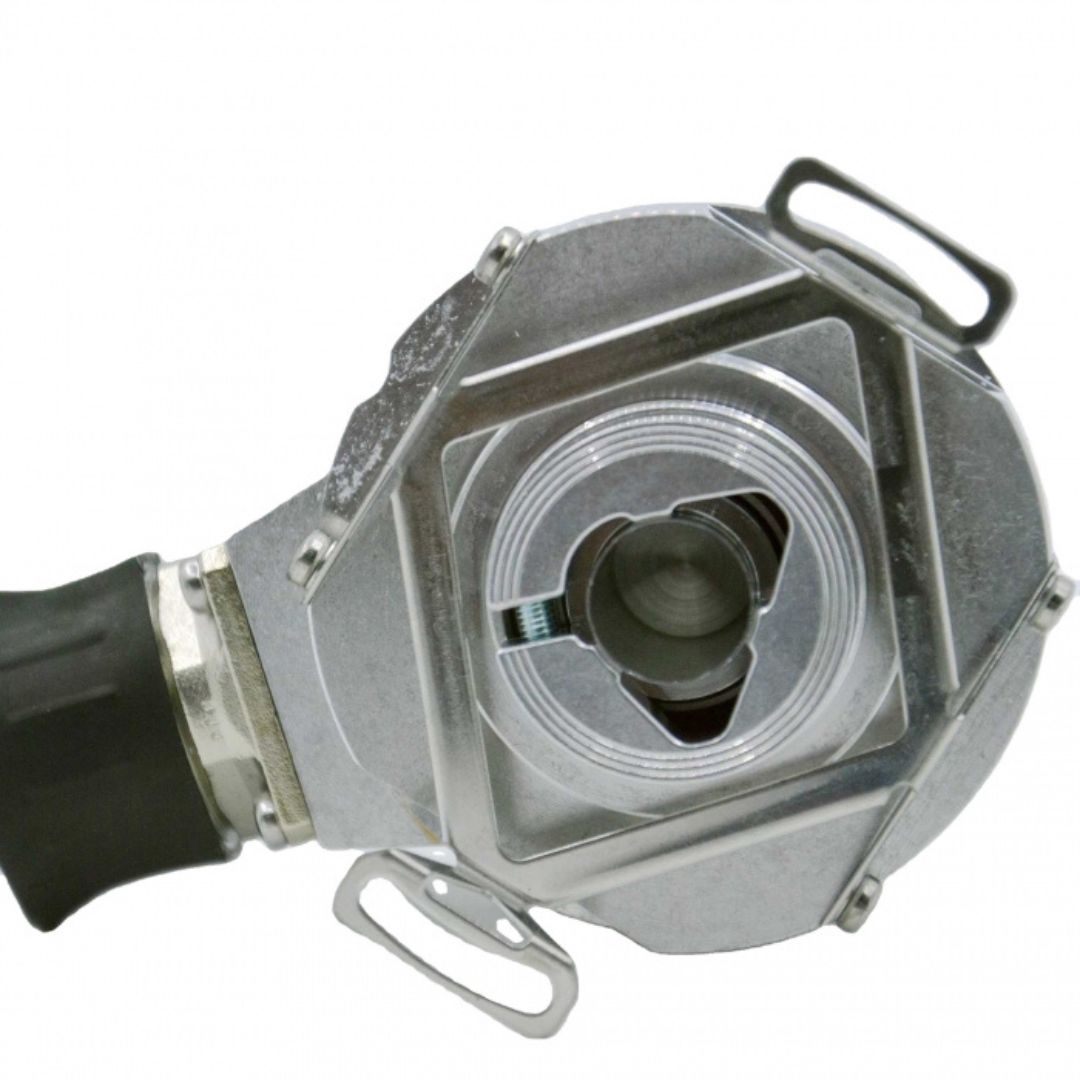
Industry 4.0 is the new phase of modern industrialization that integrates automation, machine learning, and advanced technologies. Digital encoders play a major role in this phase of technological advancement.
Walker Machinery, a major distributor of CNC control systems such as DRO units, digital encoders and more in Milton, Ontario, explores the role of encoders in Industry 4.0, their applications, benefits and challenges in this blog.
What Is The Role Of Digital Encoders In Industry 4.0?
Real-Time Motion Feedback
Since data-driven efficiency is the cornerstone of Industry 4.0, digital encoders are mainly used for real-time motion feedback to achieve this goal. As digital encoders, be it linear, rotary, or angle encoders, provide precise position- and speed-related data, they help improve accuracy in CNC tools, laser cutters, robotic arms, and other devices.
Predictive Maintenance
Reducing downtime is also a major concern of Industry 4.0. Digital encoders help in this endeavour via predictive maintenance. Through monitoring deviations in signals, encoders can effectively help predict tool wear or machine misalignment. This, in turn, helps maintenance crews to make the required modifications before major failure occurs, thereby reducing downtime.
Digital Twins
Digital twins are another creation of the combination of digital encoders and Industry 4.0. The encoders help create a digital twin or replica of the machine in question. Through this twin, performance and possible future issues can be simulated, thereby removing inefficiencies without stopping production.
Seamless Robotic Integration
Integration of digital encoders in robotics is a major part of Industry 4.0. This integration can be extended to robotic arms, robotic joints, and autonomous robots, which use linear encoders, rotary encoders and AGVs, respectively.
Mass Customization
Flexible production is another key facet of Industry 4.0. Digital encoders enable this via mass customization. This allows machines to adapt almost instantly to new production designs without sacrificing accuracy and performance.
What Are The Key Applications Of Digital Encoders In Industry 4.0 Smart Manufacturing?
CNC Machining
When it comes to CNC machining and machine tools, digital encoders aid in ultra-precise milling and turning operations, multi-axis coordination processes and automated tool positioning, thereby improving machining operations significantly.
Laser Processing
For laser processing, digital encoders play a significant role in smart manufacturing by ensuring stability during beam alignment, reinforcing high accuracy during cutting or engraving at the micron level, and ensuring consistent accuracy and performance even at high speeds.
Robotics
The role of digital encoders in the realm of robotics is quite extensive. They aid in the linear motion of the robotic arm, ensure safe collaboration between humans and robots via extensive feedback systems, and ensure high-resolution motion control for assembly tasks where delicate handling is paramount.
Logistics
When it comes to packaging and logistics, encoders primarily serve conveyor systems, pick and place automation equipment, sorting machines and AGVs for warehousing applications.
Heavy Industry
The heavy industry is exposed to a lot of contaminants and challenging conditions. Magnetic encoders help here with a decent level of accuracy and their ability to handle the harsh conditions, aiding in precision cutting and other processes.
What Are The Benefits Of Digital Encoders In Industry 4.0?
High Precision
High precision is a major feature of digital encoders that benefits Industry 4.0 with its micron-level accuracy and adherence to the strictest of tolerances.
Flexibility
The encoders are programmed to be easily adapted to multiple applications, offering versatility with precision.
Durability
Some iterations, such as magnetic encoders, offer exceptional durability along with impressive levels of accuracy.
Connectivity
Through integration with the Internet of Things (IoT), encoders can share valuable data and enable remote equipment monitoring.
Efficiency
The encoders enable more efficient operations by reducing waste, energy consumption and instances of downtime.
Scalability
The encoders can be increased or decreased in number to scale up or down according to requirements. This makes them equally suitable for small workshops as well as mega factory operations.
What Are The Challenges Faced By Digital Encoders?
Compatibility
While versatile in operations, digital encoders do not work well with all types of machinery. For instance, integrating them with legacy PLCs can be a major challenge.
Cost Effectiveness
While high-resolution encoders, such as optical or absolute encoders, are exceptional in their accuracy, they do drive up the cost of operations.
Training
Training technicians about the different types of encoders might produce variable results. There are no consistent or guaranteed results.
Data Overload
The data generated by digital encoders can be massive, according to the scale of operations. To process them properly, a robust IT infrastructure becomes paramount, further increasing infra challenges.
Conclusion
In summary, digital encoders play a major role in Industry 4.0. Their applications vary from CNC machining to laser processing and logistics. However, they come with their own set of pros and cons for smart manufacturing, so they must be chosen carefully according to specific applications.
To learn more about digital encoders, contact us at Walker Machinery today. As one of the biggest distributors of CNC controls and digital encoders such as rotary encoders, angle encoders and linear encoders in Milton, Ontario, we serve major industries such as manufacturing, robotics, metrology and more. Contact us at 905-876-0890 today for more details.
FAQs:
What are the major types of digital encoders used in smart manufacturing?
The major types of digital encoders used in smart manufacturing include optical encoders, magnetic encoders, absolute encoders, incremental encoders and hybrid encoders.
How can digital encoders serve smart manufacturing?
Digital encoders can serve smart manufacturing by providing real-time data, enabling predictive maintenance and supporting adaptive control.